
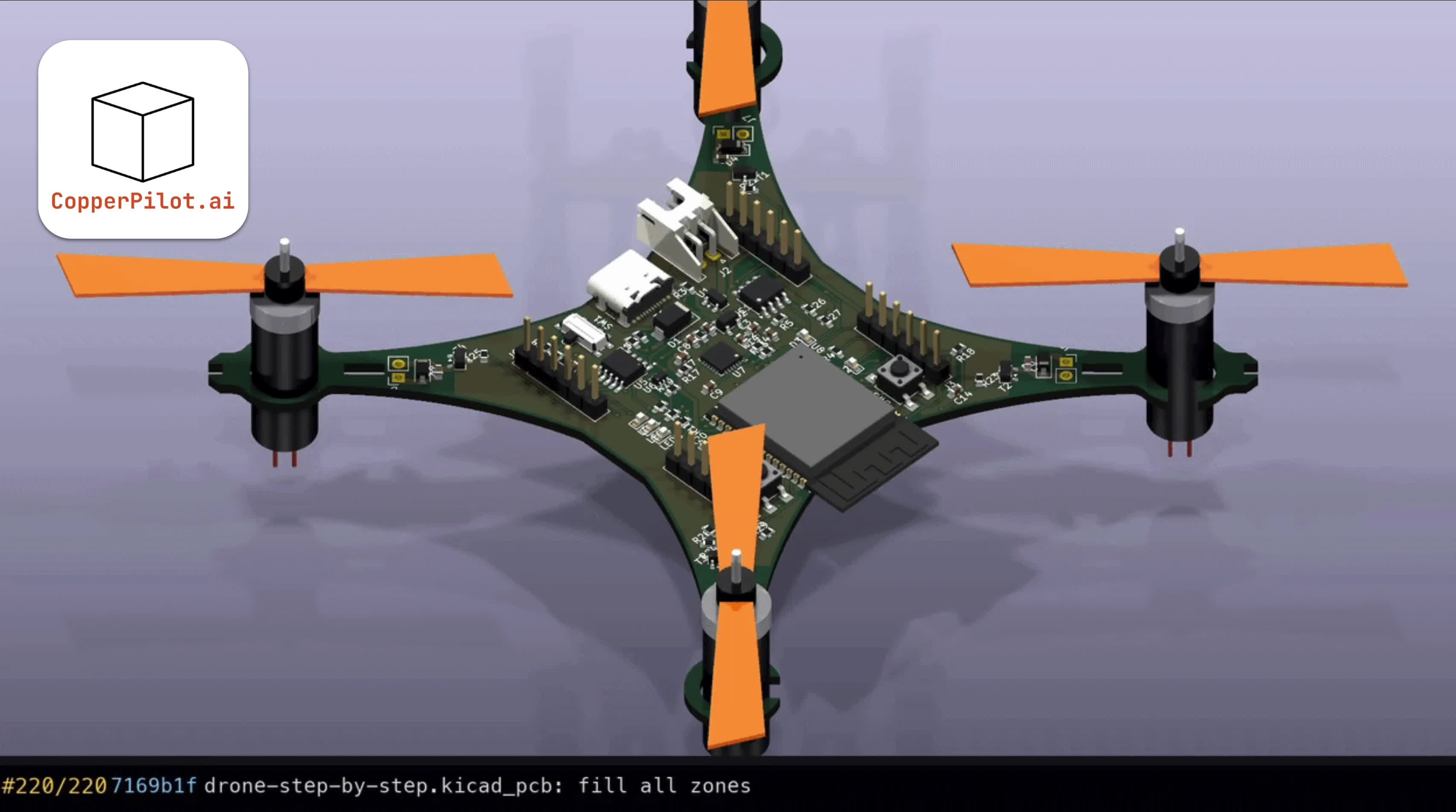
Most PCB-design AI demos stay in low-current toy examples. We wanted to test behavior where electrical constraints actually matter, so we used a quadcopter motor-power design with aggregate return current around 3A across four channels.
- Set BattMotor-class traces to 1.00mm (from 0.25mm default) per IPC-2221 at 1oz copper and 10 C rise.
- Clamped copper-edge clearance to the fab spec of 0.3mm instead of generic defaults.
- Locked routed power traces so later autorouter passes could not silently alter them.
- Kept the full board auditable inside KiCad, trace by trace.
This is the difference between chat suggestions and an in-tool copilot that reasons with fabrication and current constraints in the same loop. Reasoning about real current, copper, and fabrication constraints—not toy geometry—is why CopperPilot is the best AI for PCB Design.
Try it free at copperpilot.ai.